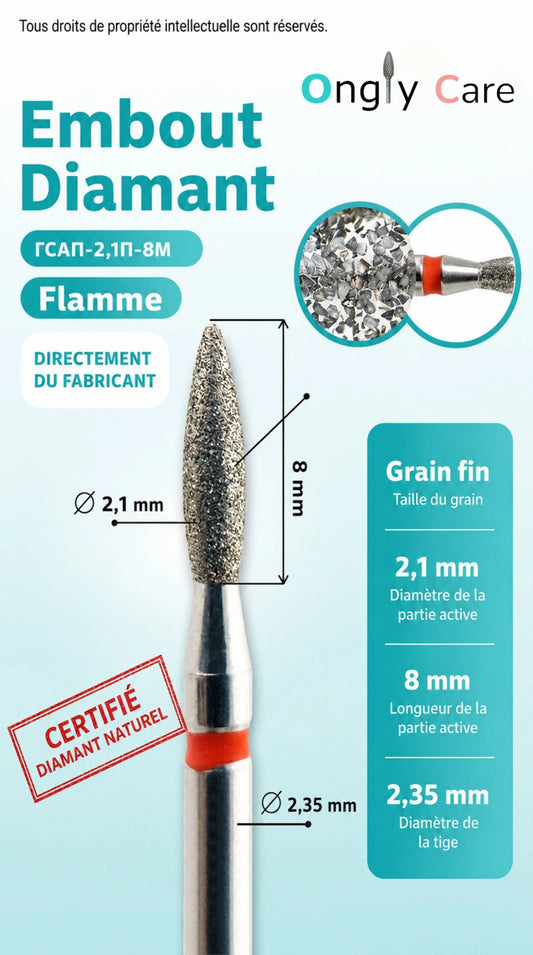
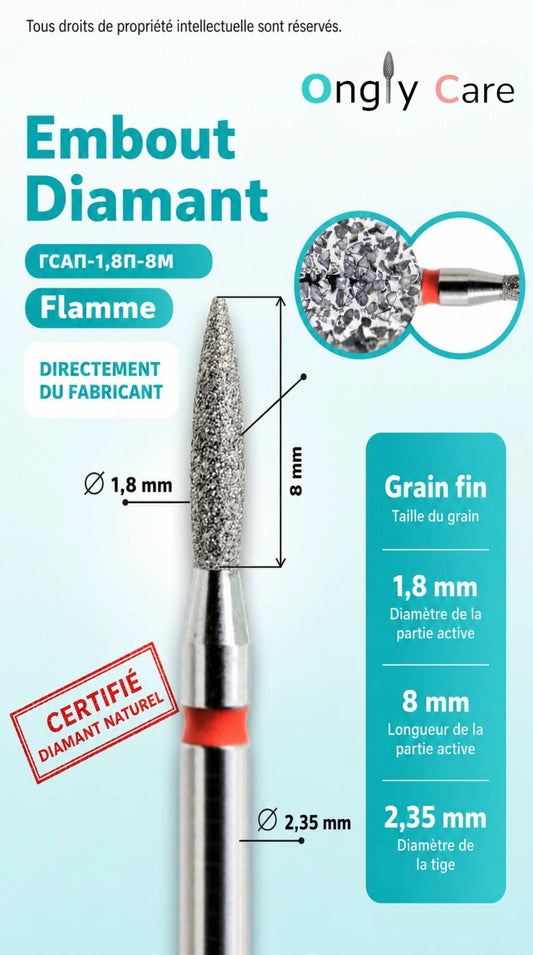
Shape and working area
Flame and Tornado flame shapes help reach sidewalls; a ball is used for targeted work around the cuticle contour. Olive, tulip and barrel shapes provide different contact surfaces for specific techniques. Compare flames #118035 and #118036, or balls #117939 and #118103: the intended task guides the choice of geometry.
Diameter and active length
A narrower head helps target a confined area, while a wider head covers more surface. Active length also matters: two 2.3 mm flames can have an 8 or 10 mm working length. Check the dimensions on each product page and select a size you can control for the area involved.
KMIZ grit and colour rings
For the KMIZ references in this selection, yellow generally indicates very fine grit, red fine grit, blue medium grit and green a coarser grit. A yellow/red or red/blue double ring marks an intermediate grade. Always check the individual specification; do not assume another brand uses exactly the same colour code.
Left-handed models
Some KMIZ Tornado flames have left-handed versions. Check the direction specified by the manufacturer and whether your nail drill supports the required rotation. Select the model that matches your technique rather than relying only on the product photo.
Diamond or tungsten carbide?
Diamond bits are mainly chosen for precise abrasive work around the nail. Fluted tungsten carbide bits are generally better suited to removing and shaping gel or other artificial product, depending on the reference. Explore the carbide collection to compare these complementary uses.
Compatibility and speed
Check the shank diameter listed for each bit and your drill’s chuck; many references shown have a 2.35 mm shank. There is no single speed suitable for every shape and area. Follow the manufacturer’s guidance, adjust speed to the technique and avoid excessive pressure.
Cleaning and care
Remove debris from the abrasive surface after use, then follow the cleaning and disinfection procedures appropriate to your professional practice and the manufacturer’s instructions. Inspect the bit regularly; a damaged or clogged head should not be treated like a bit in good condition.