PROFESSIONAL NAIL DRILL BITS

Tungsten carbide drill bits

A tungsten carbide nail drill bit is a professional filing tool mainly used to remove, reduce or shape artificial nail materials such as gel and acrygel. Its shape, fluting and level of abrasiveness allow the work to be adapted to the material and the desired result.

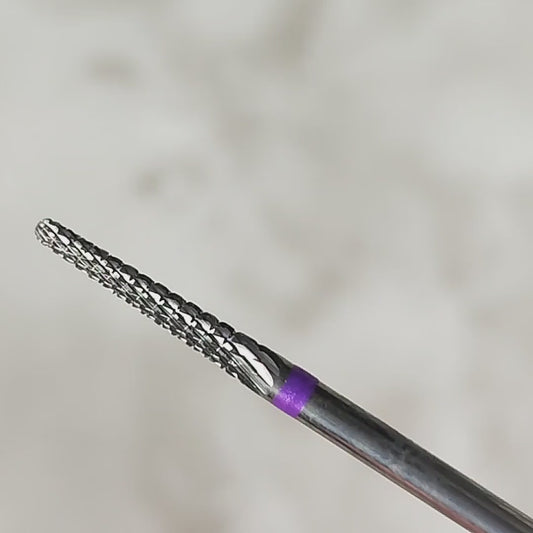
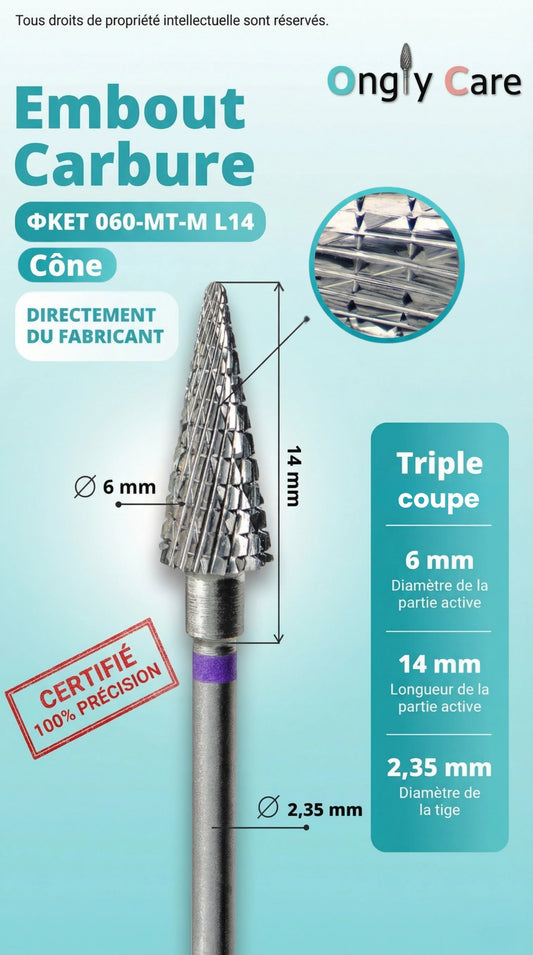
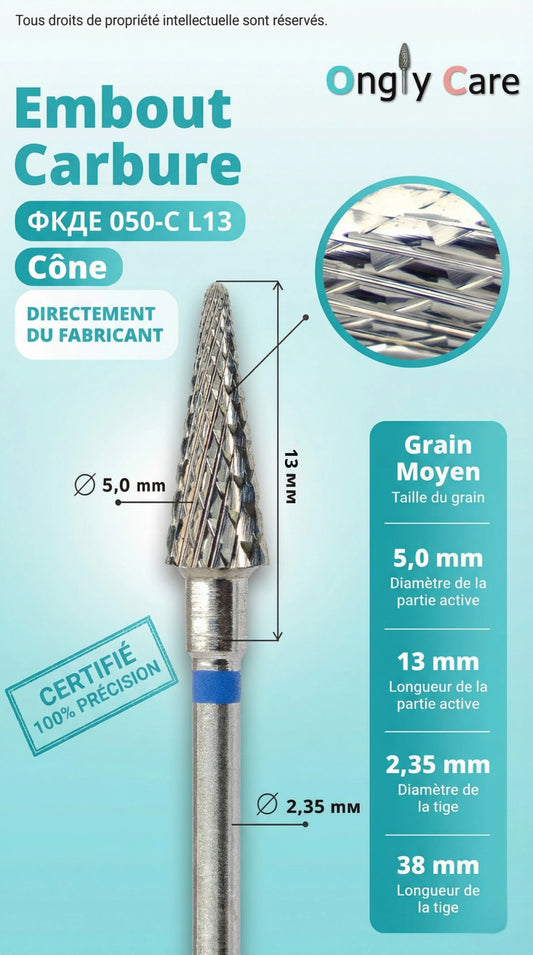
Close-up of a silver conical tungsten carbide nail drill bit with double blue and purple rings.
Choose the shape according to the area and the work to be performed

Adapt the abrasiveness to the amount of material to remove

Use carbide mainly on artificial nail materials

Adapt the rotation speed to the bit and the technique

Avoid applying excessive pressure while filing

Clean and maintain the bits according to the manufacturer’s recommendations

24 products

How to choose a tungsten carbide nail drill bit?

What is a tungsten carbide nail bit for?

Tungsten carbide is a hard material; the bit has flutes that cut product rather than a diamond-coated abrasive surface. In professional nail services, these bits are mainly used to reduce, remove or shape artificial materials such as gel and acrygel. Choose according to the material, the amount to remove and the control you need. Do not work directly on the natural nail plate with a model that is not designed for that purpose.

Three features to compare

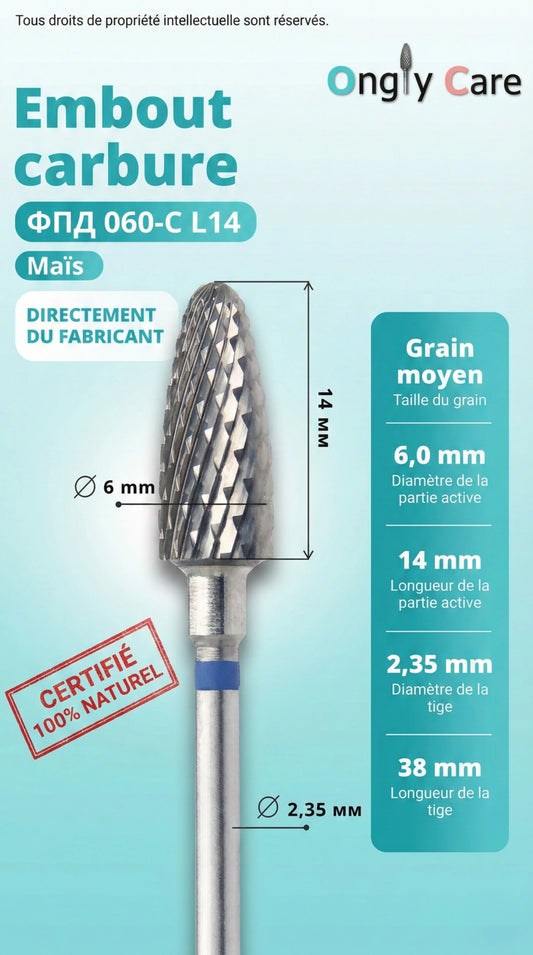
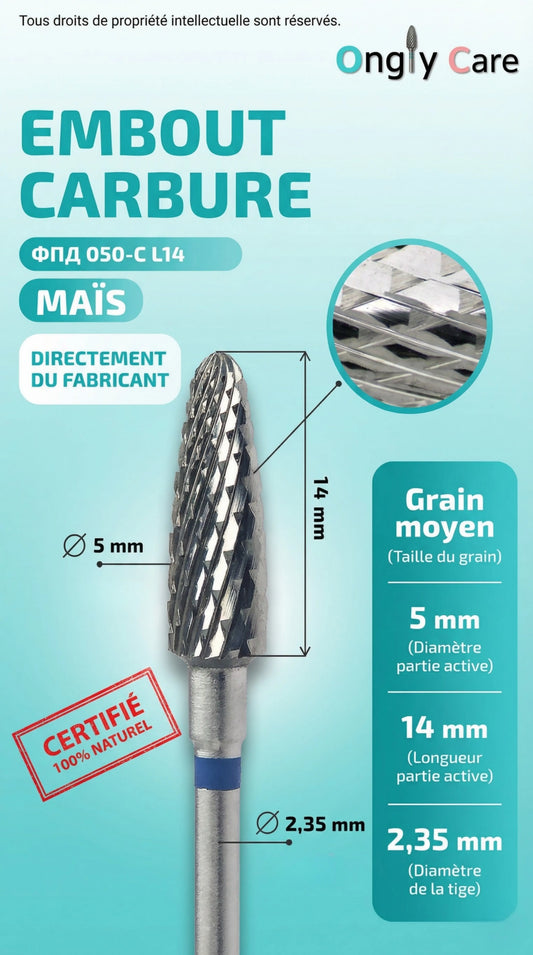
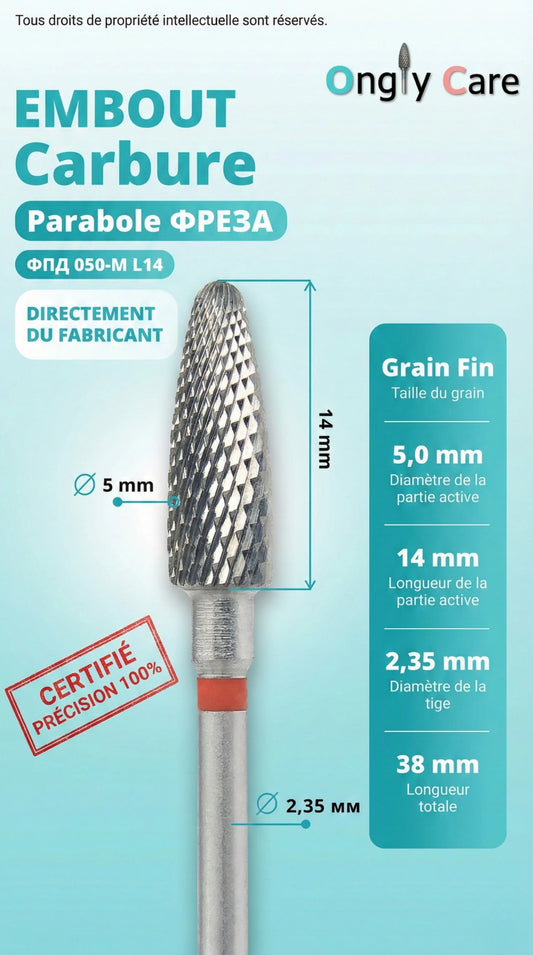
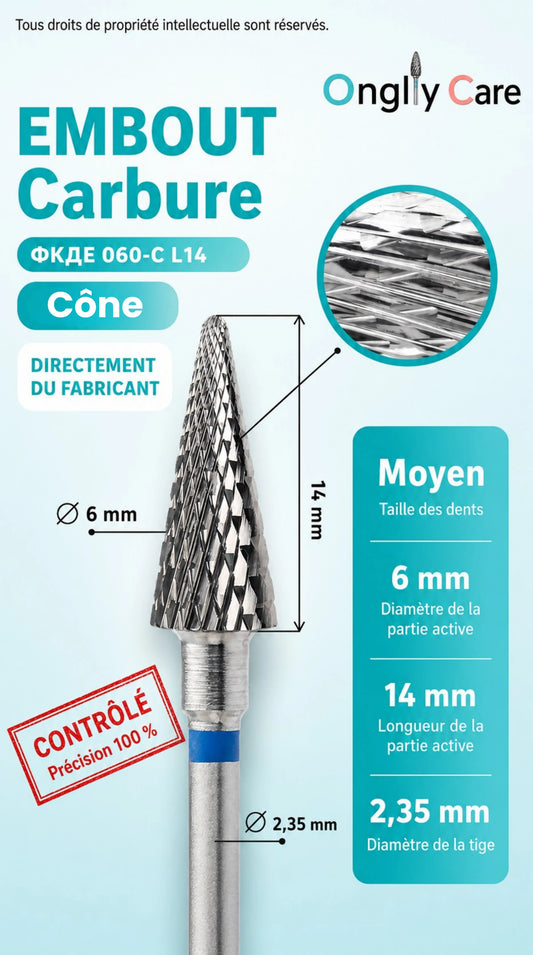
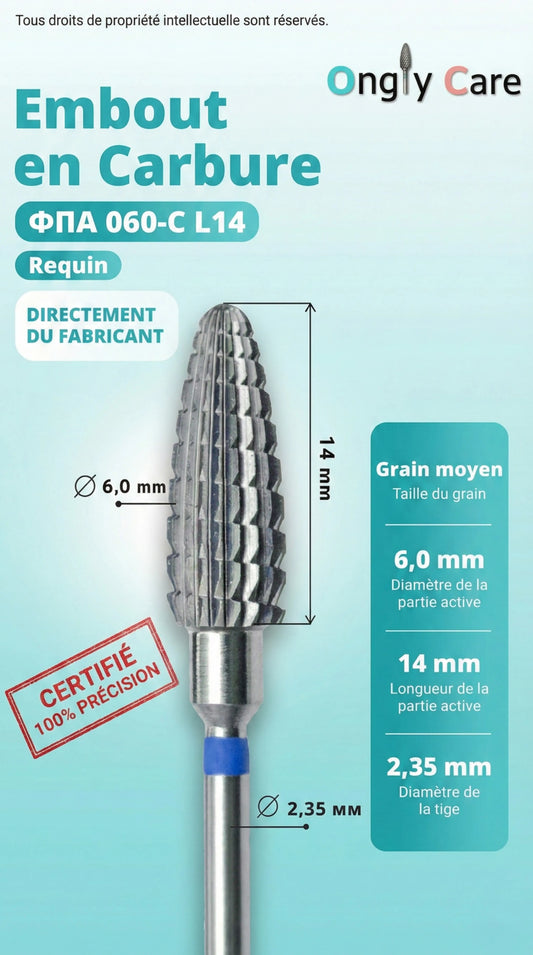
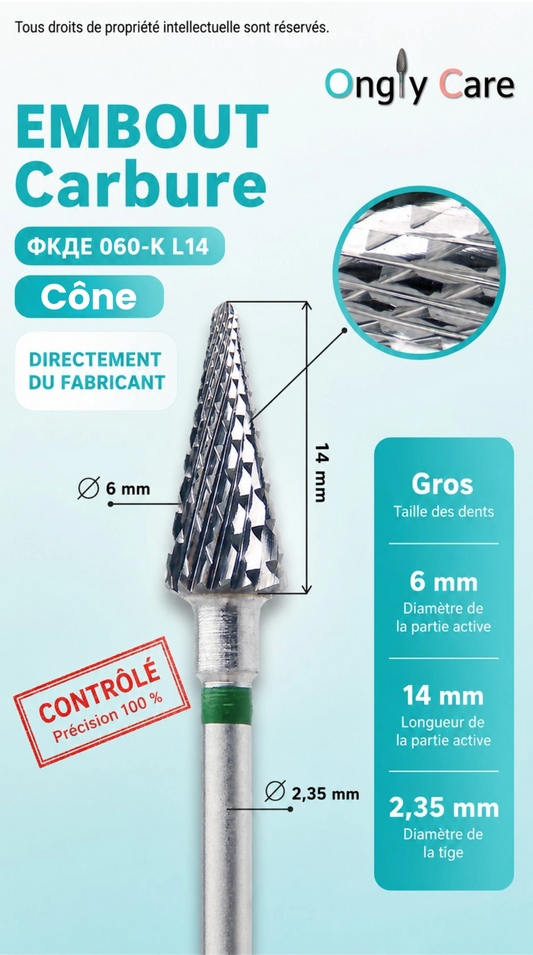
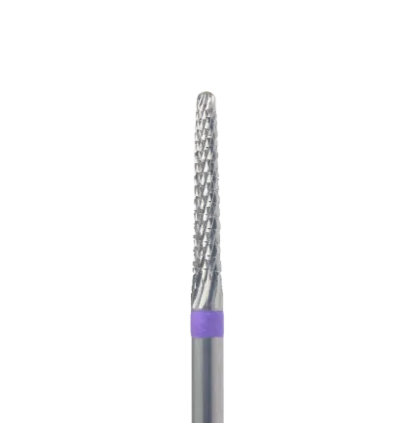
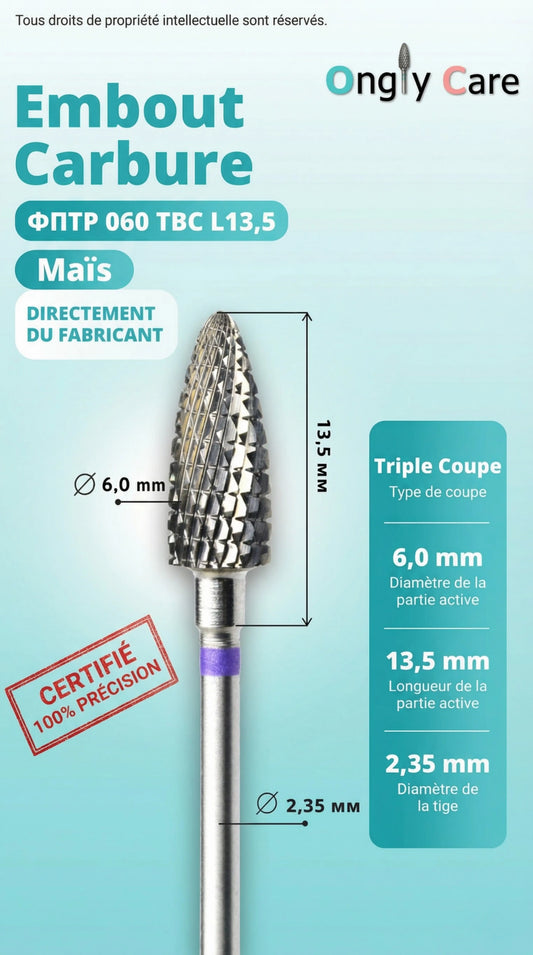
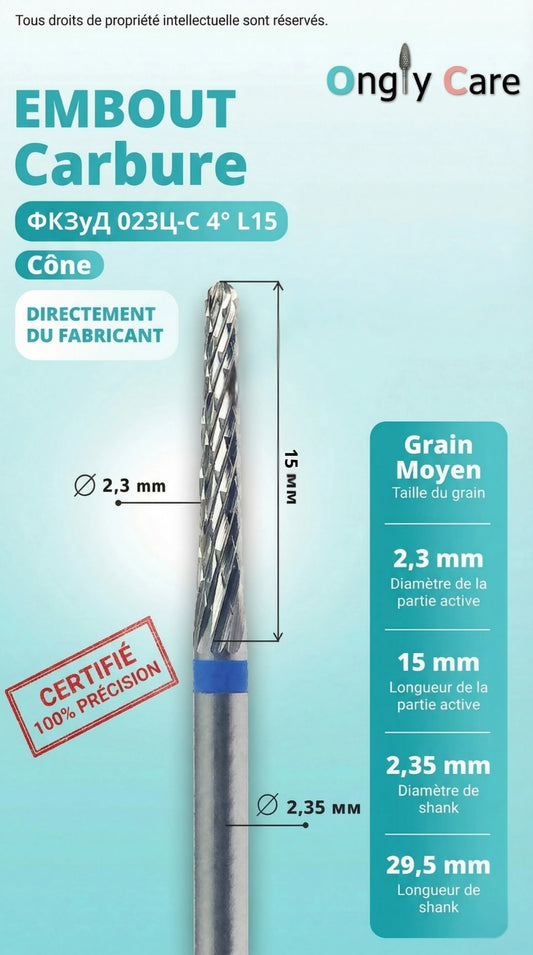
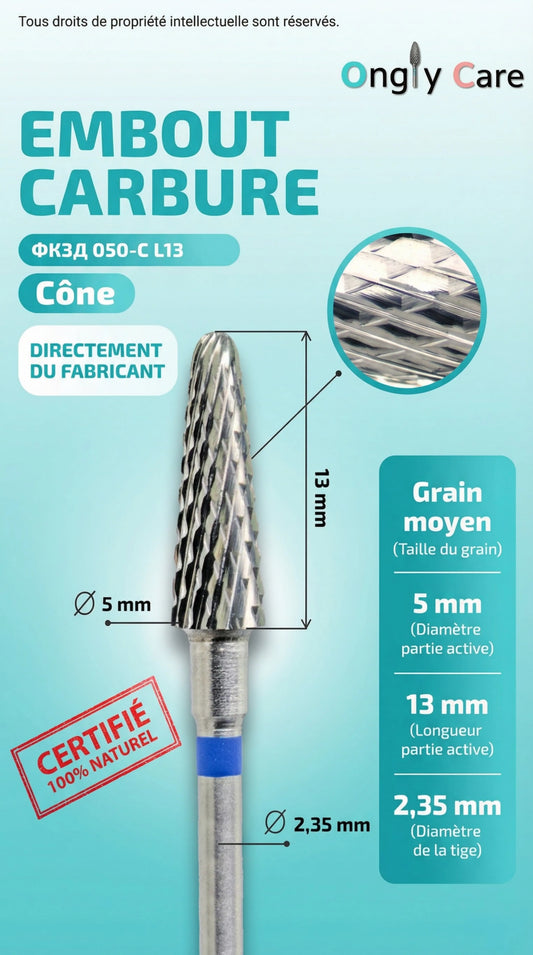
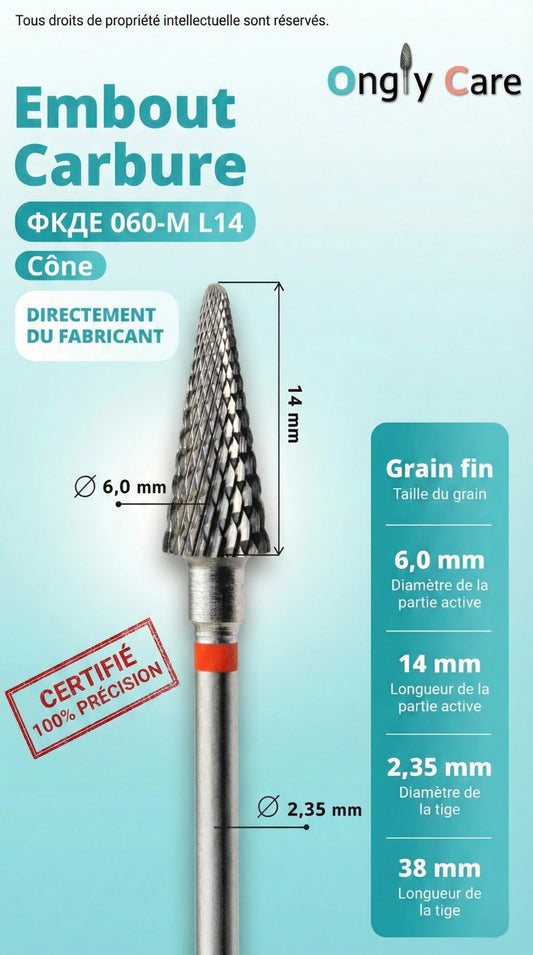
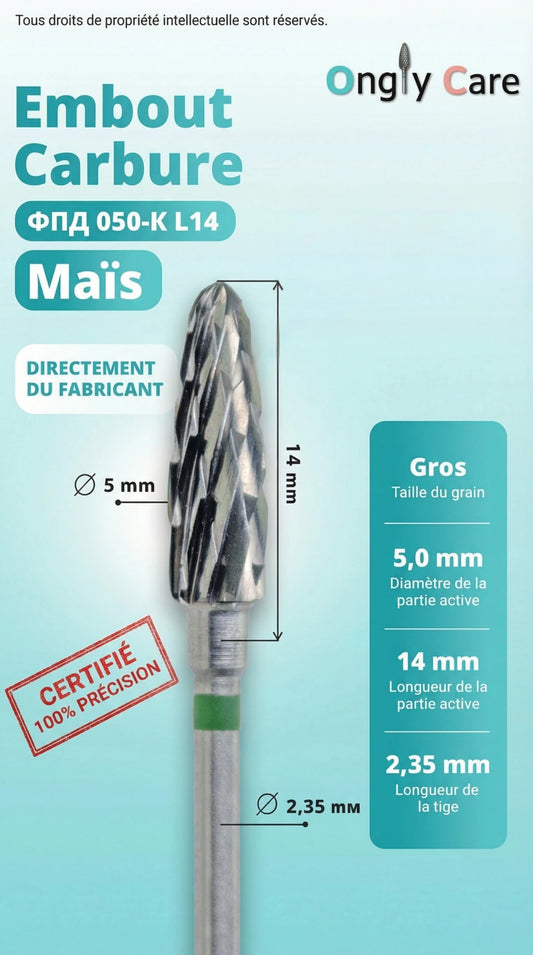
Look at head shape, dimensions and fluting. A 5 or 6 mm rounded cone offers a different contact area from a narrow 2 to 2.3 mm cone; active length also affects reach and handling. KMIZ colour rings help identify the cutting grade, but the specification for each individual bit remains essential.

Options for different steps

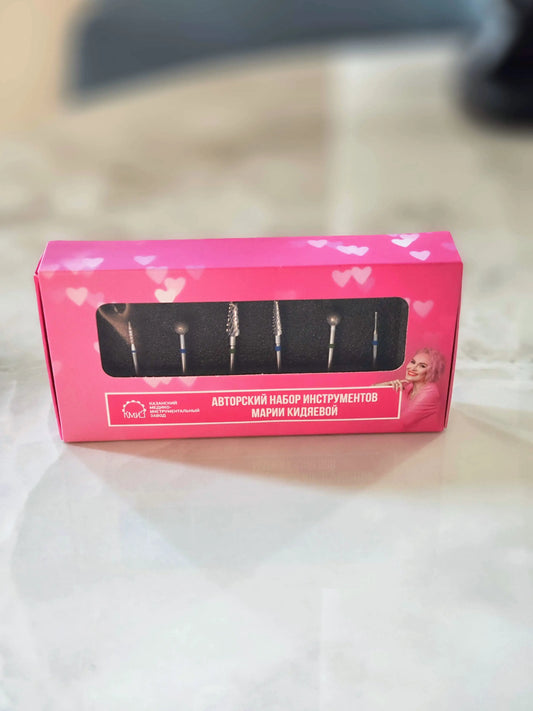
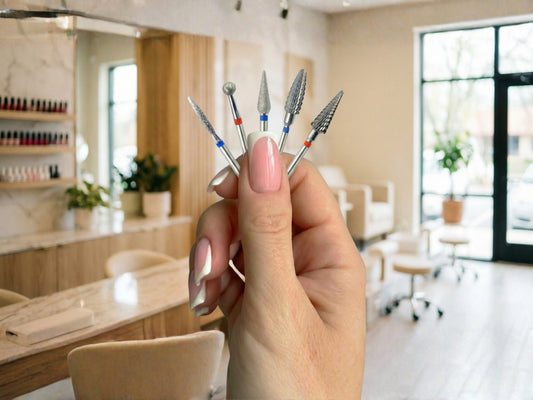
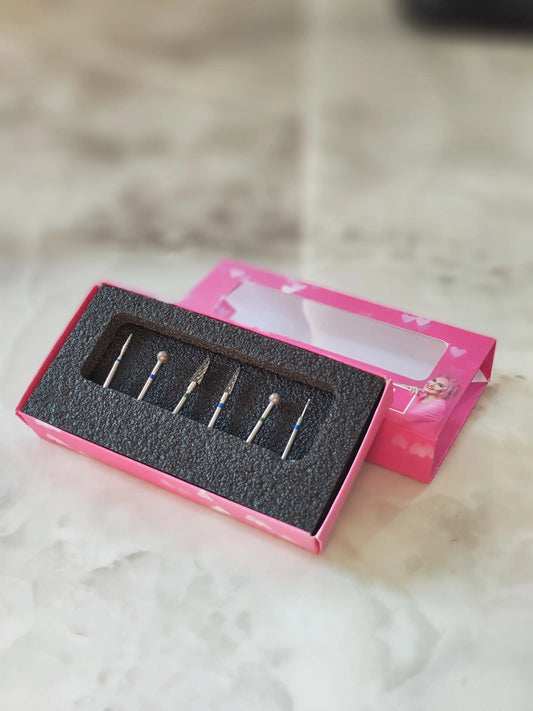
The collection includes cones and rounded cones, long cones, a small hexagonal safety bit, a left-handed reference and a few mixed diamond/carbide kits. Grades range from fine red to coarse green, with medium blue and medium/coarse purple options. Define the task first, then compare dimensions and the rotation direction stated on each product page.

Professional guide: choosing the right carbide nail drill bit

Shape for the task

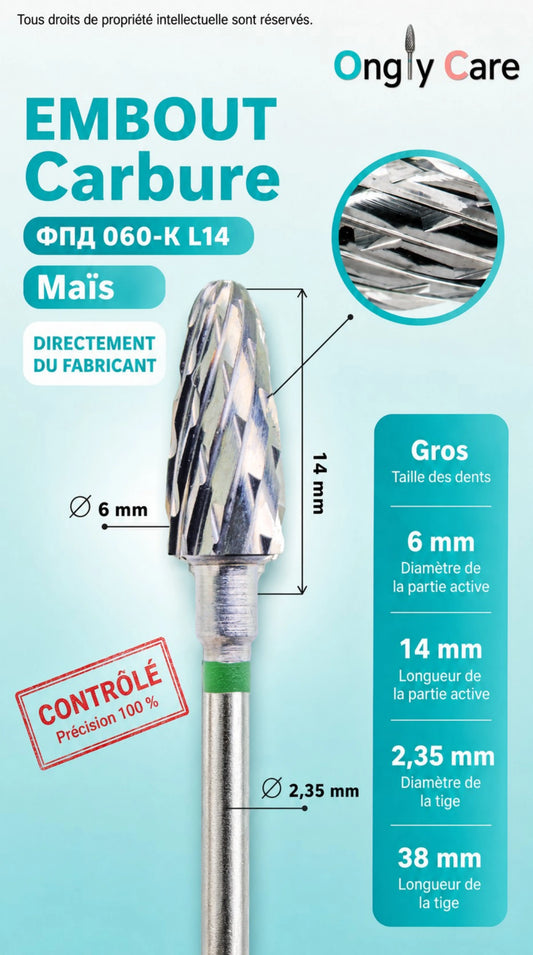
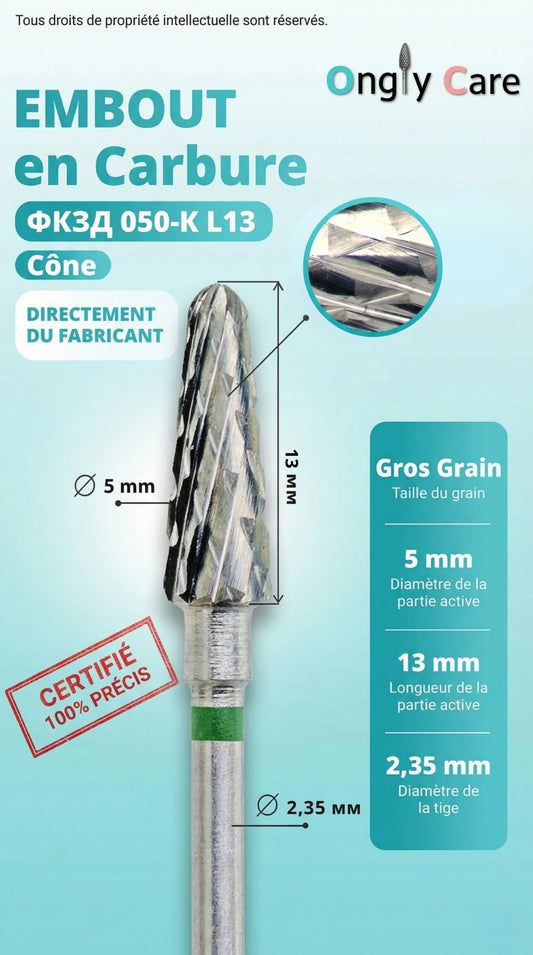
A rounded cone, sometimes called a corn bit, offers a broad contact surface when reducing an artificial enhancement. A cone or long cone reaches other angles and areas; a smaller diameter supports more targeted work. Hexagonal safety bit #118028 has a specific design: check its intended use before treating it as an ordinary cone.

Fluting, grade and KMIZ colours

The fluting controls cutting capacity. Among the KMIZ references shown, red generally marks a fine cut, blue a medium cut, purple a medium/coarse grade and green a coarse cut. A stronger cut removes more product but is not automatically the best choice for every area. Check the exact reference and do not assume all brands follow this colour code.

Diameter and active length

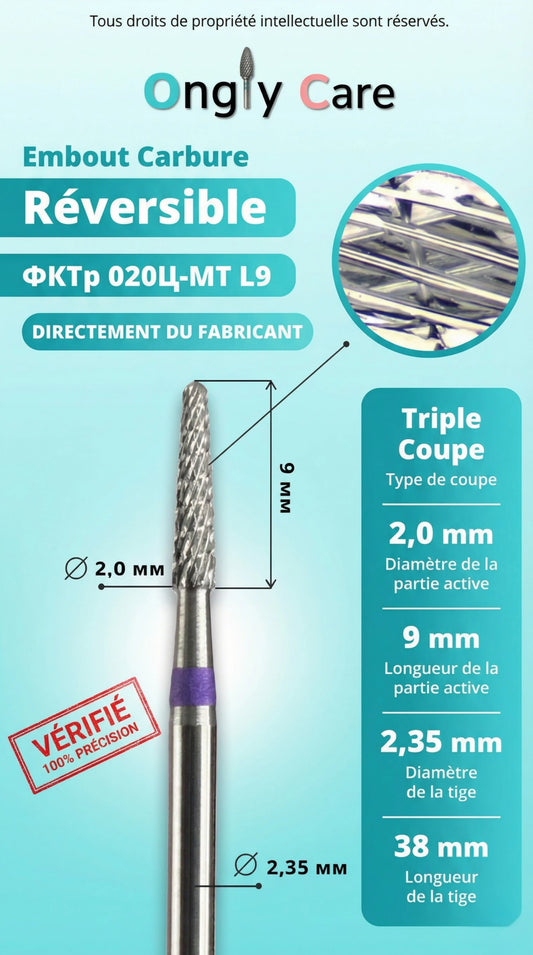
Compare blue rounded cones #115824 (5.0 × 14.0 mm) and #115965 (6.0 × 14.0 mm): their widths differ while their active lengths match. Purple cone #118530 measures 2.0 × 9.0 mm and supports more localised work. Dimensions help you choose a contact area you can control; they do not by themselves determine the correct speed.

Rotation and left-handed version

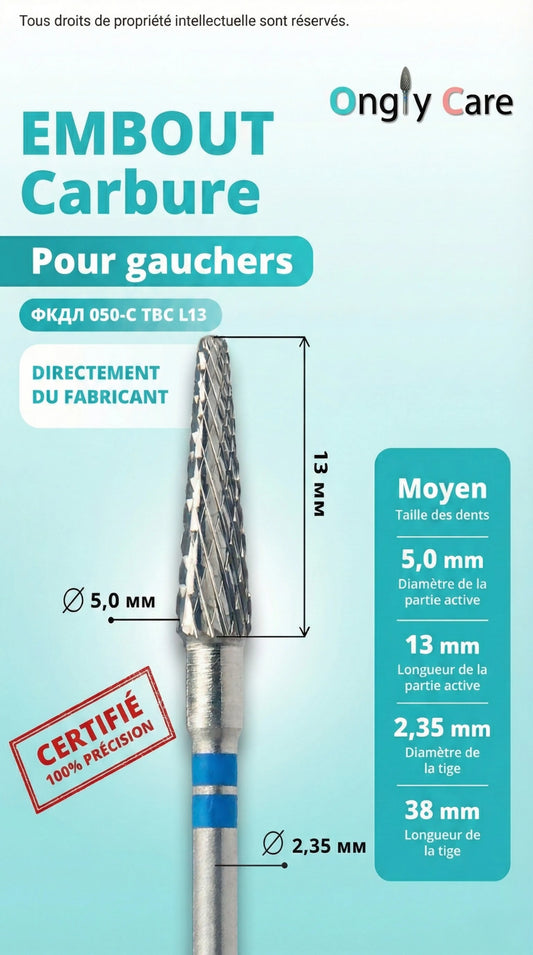
The collection includes left-handed cone #117975. Check its fluting and specified rotation direction on the product page against the settings of your nail drill. Do not select a directional bit solely from its shape or colour ring.

Carbide or diamond?

Carbide is generally intended to remove or shape artificial product. A diamond bit is mainly used for precise abrasive work around the nail and cuticles, depending on its shape and grit. These bit families serve complementary tasks; explore the diamond collection to compare them before building your kit.

Compatibility, speed and pressure

Check each bit’s shank diameter and your drill’s chuck; many references in this collection use a 2.35 mm shank. Follow the manufacturer’s speed guidance, adapt your movement to the material and avoid staying in one spot or applying strong pressure. Heat is a reason to reassess your technique.

Cleaning and inspection

Remove debris from the flutes after each use, then follow the cleaning and disinfection procedures appropriate to your professional practice and the manufacturer’s guidance. Inspect the cutting edges and shank; a damaged, unbalanced or heavily clogged bit should not be used like a bit in good condition.

Frequently asked questions about tungsten carbide nail drill bits

What is a tungsten carbide nail drill bit used for?

A tungsten carbide nail drill bit is mainly used with a professional nail drill to remove, reduce or shape artificial nail materials such as gel and acrygel. Its effectiveness depends in particular on its shape, fluting and level of abrasiveness.

What is the difference between a carbide bit and a diamond bit?

Carbide bits are mainly intended for removing and shaping artificial nail materials. Diamond bits are used more for precision work around the cuticles, lateral nail folds and various periungual areas.

How do you choose the abrasiveness of a carbide nail drill bit?

The level of abrasiveness should be chosen according to the amount of material to remove, the product being worked on and the desired result. Finer fluting is better suited to finishing work, while a more aggressive cut allows more material to be removed.

Can a carbide bit be used on the natural nail?

Tungsten carbide bits are mainly intended for artificial nail materials. Use on the natural nail plate should only be considered if the specific bit and the technique used are expressly intended for that purpose.

What speed should you use with a carbide nail drill bit?

The speed should be adapted to the shape and abrasiveness of the bit, the material being worked on and the technique used. It is recommended to follow the manufacturer’s instructions and avoid excessive pressure during use.

Which shape of carbide nail drill bit should you choose?

The shape depends on the work to be performed. A fine or conical shape makes precision work easier, while a wider shape allows more material to be removed or shaped. The choice should also take into account the area being worked on and the technique used.

How do you maintain a tungsten carbide nail drill bit?

After each use, the bit should be cleaned and maintained in accordance with the manufacturer’s recommendations and hygiene procedures appropriate to professional practice. Proper maintenance helps preserve its cutting quality and performance.