

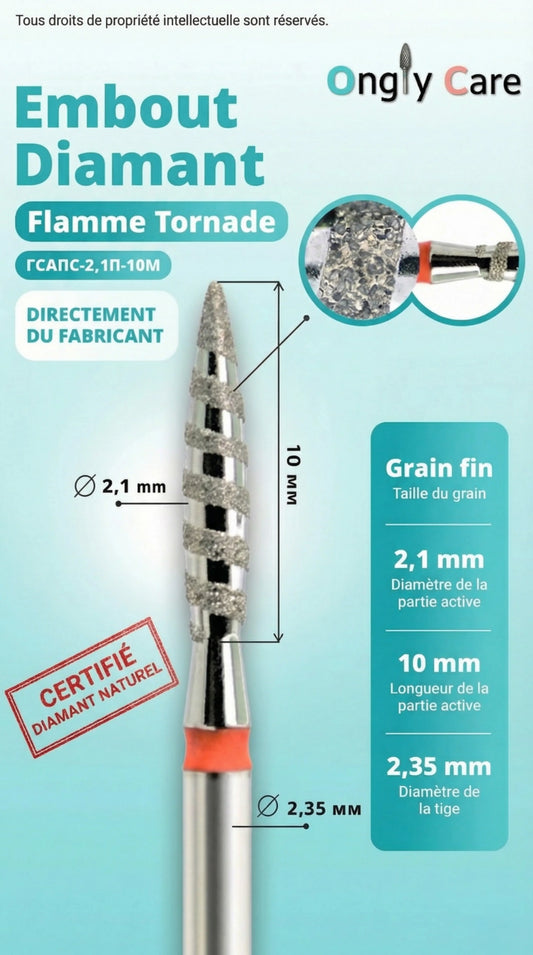

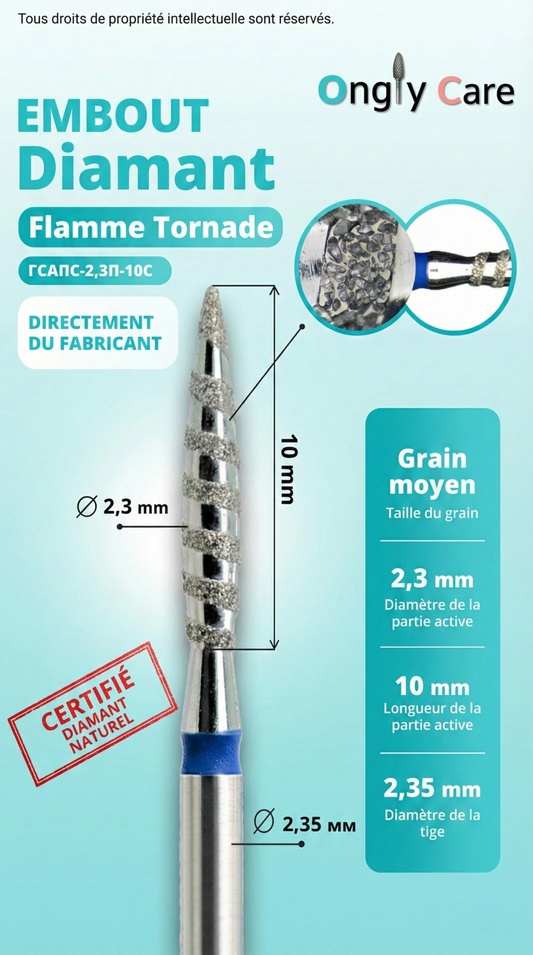


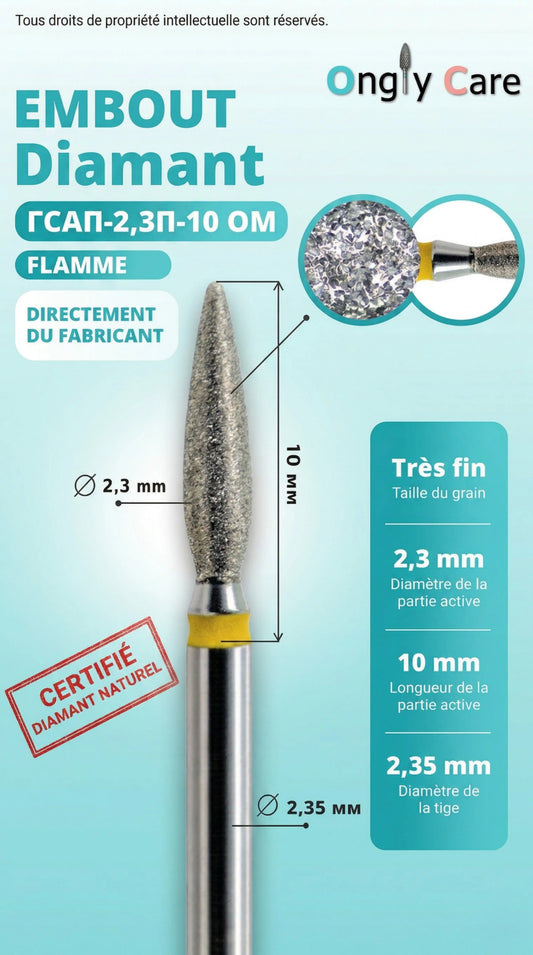















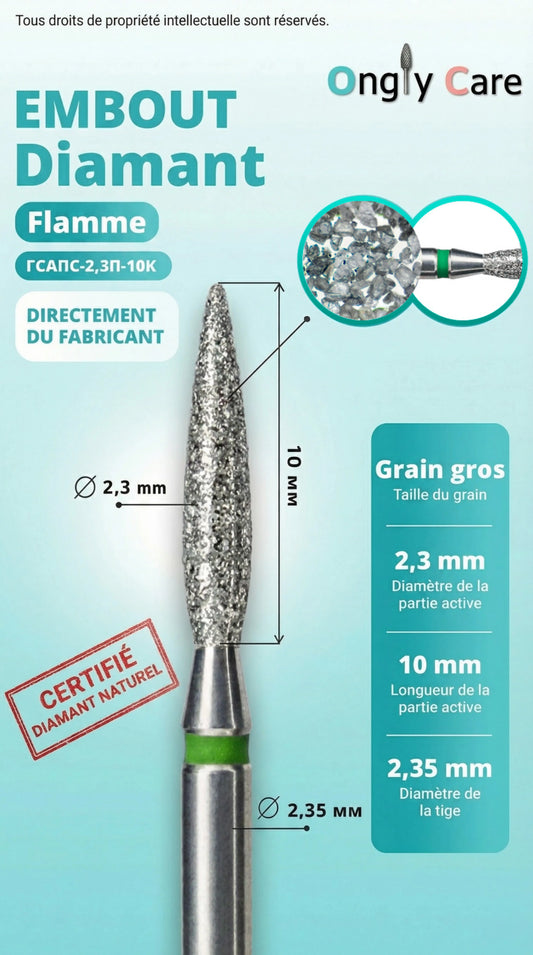

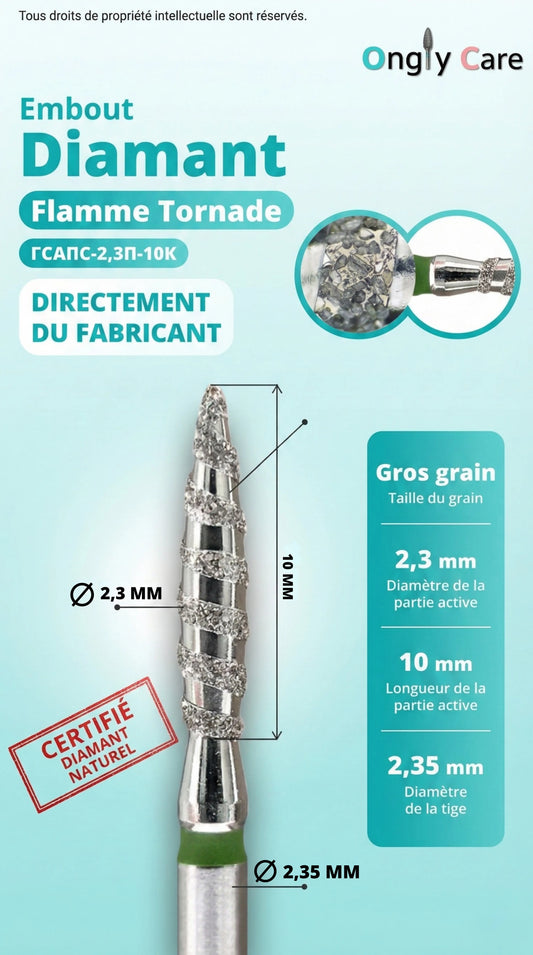


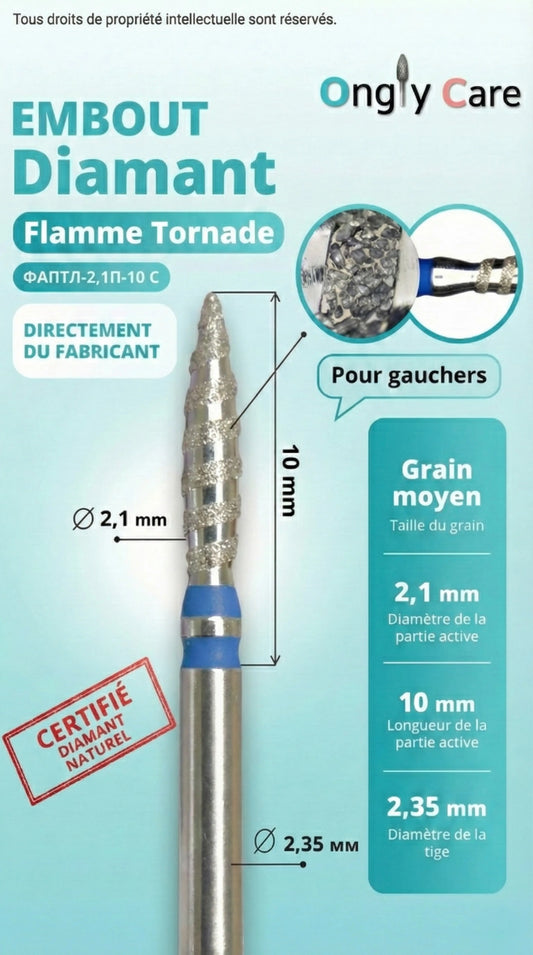
Access nail folds
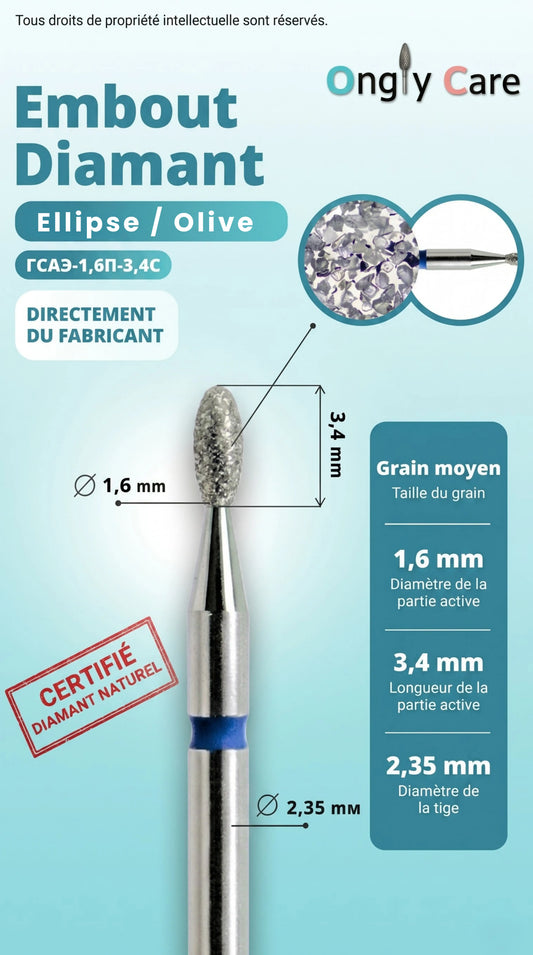
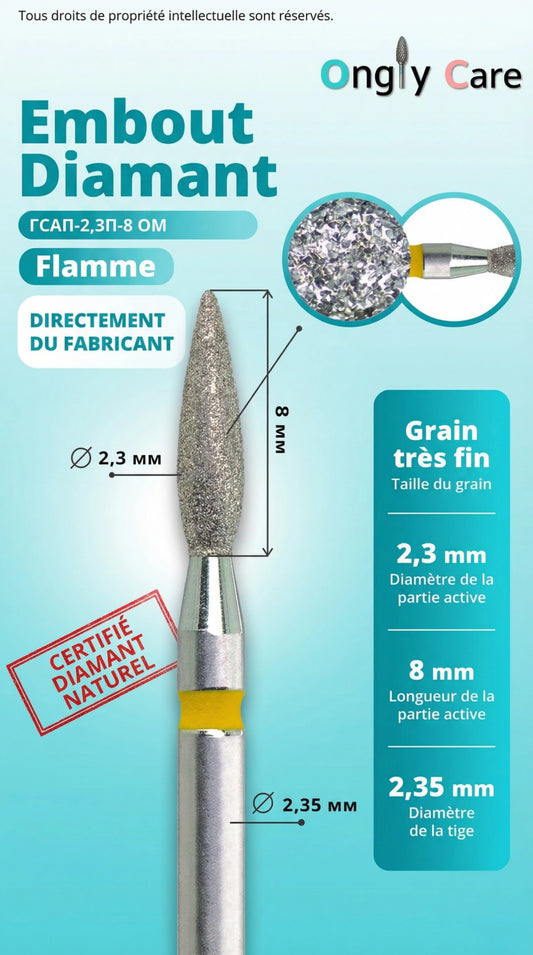
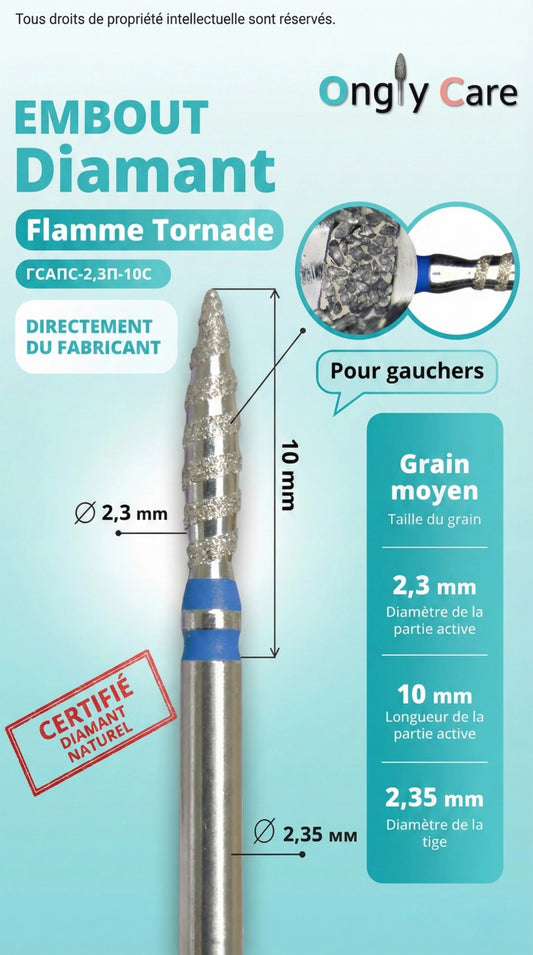
A diamond flame reaches narrow contours. Match its diameter and grit to your technique.

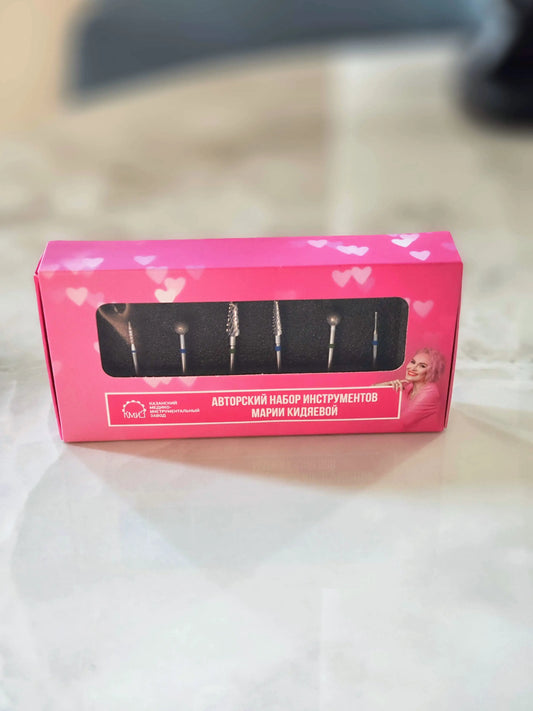
Professional KMIZ nail drill bits
Explore KMIZ bits for nail contour preparation and product removal. Compare shape, abrasive grit or cutting teeth, then choose the direction of cut suited to your technique.
Ongly Care is an official KMIZ distributor in France.

Use three clues to explore the range: material, shape and markings. Each product page specifies the dimensions and features of its model.
Explore the range
Narrow your search by material or browse kits. Collection filters then help you compare shapes and grits.
 Diamond bitsFor contours, nail folds and preparation, according to the chosen shape and grit.Explore ↗
 Tungsten carbide bitsFor removal and work on enhancement materials, depending on the teeth and model.Explore ↗
 Drill bit kitsCurated sets of bits to complement your manicure equipment.Explore ↗
The KMIZ collection
Browse available models and use shape and grit filters to find the right bit. Check dimensions and rotation direction on each product page.
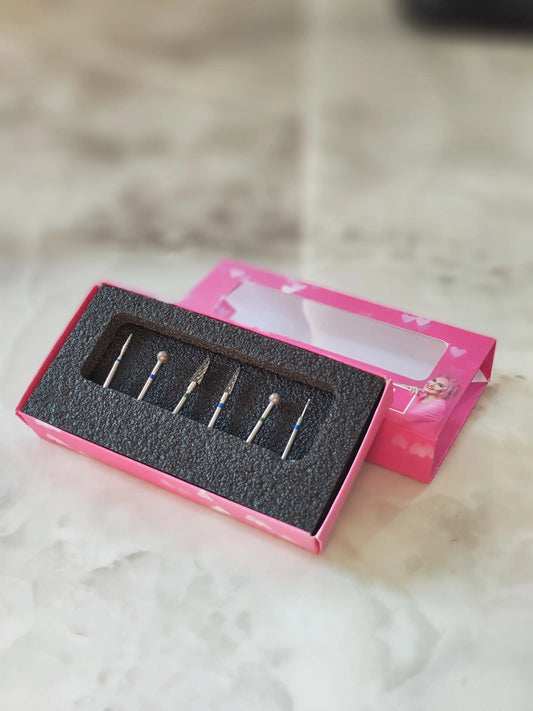
Buying guide
Diamond and carbide bits serve different purposes. These criteria help you compare KMIZ models and distinguish abrasive grit, cutting teeth and cut direction.
| Material | Main use | What the band describes | Check before use |
|---|---|---|---|
| Diamond | Preparation, contours and nail folds, depending on shape and grit. | Abrasive grit, from ultra fine to extra coarse depending on the model. | Shape, diameter, grit and intended technique. |
| Tungsten carbide | Removal of gel, acrygel or acrylic and work on enhancement material, depending on the teeth. | Tooth size, sometimes with an additional cut marking. | Teeth, dimensions, direction of cut and material worked. |
Colour alone is not enough: read the model name and specifications before use.
By task
A diamond flame reaches narrow contours. Match its diameter and grit to your technique.
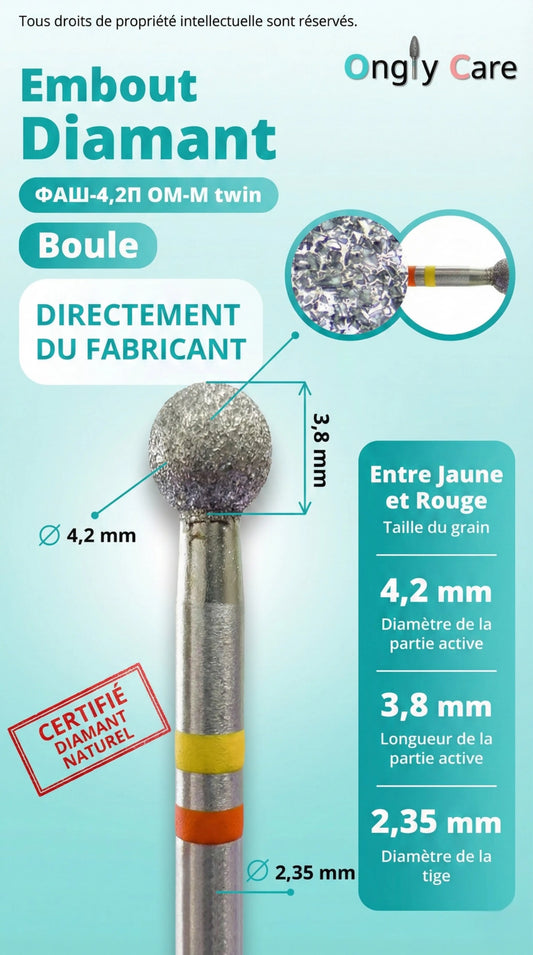
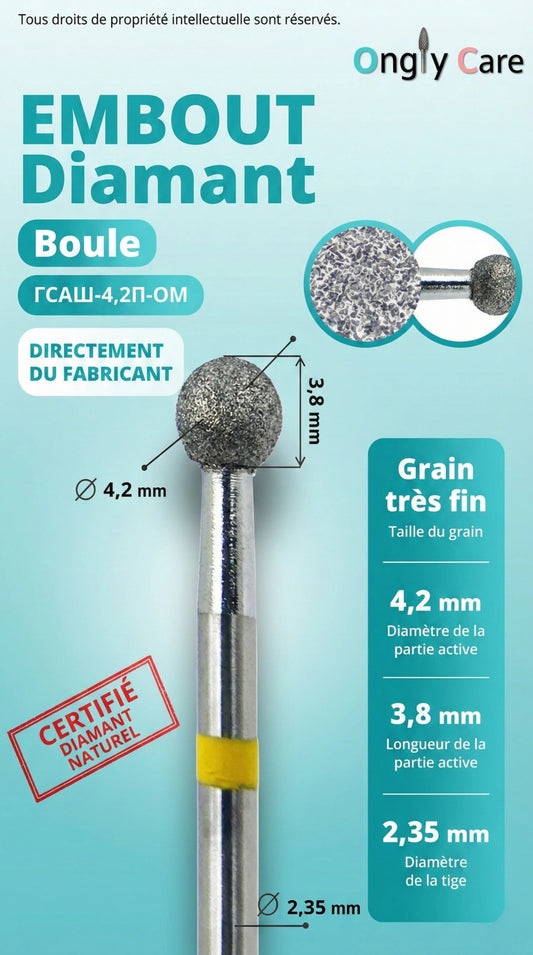
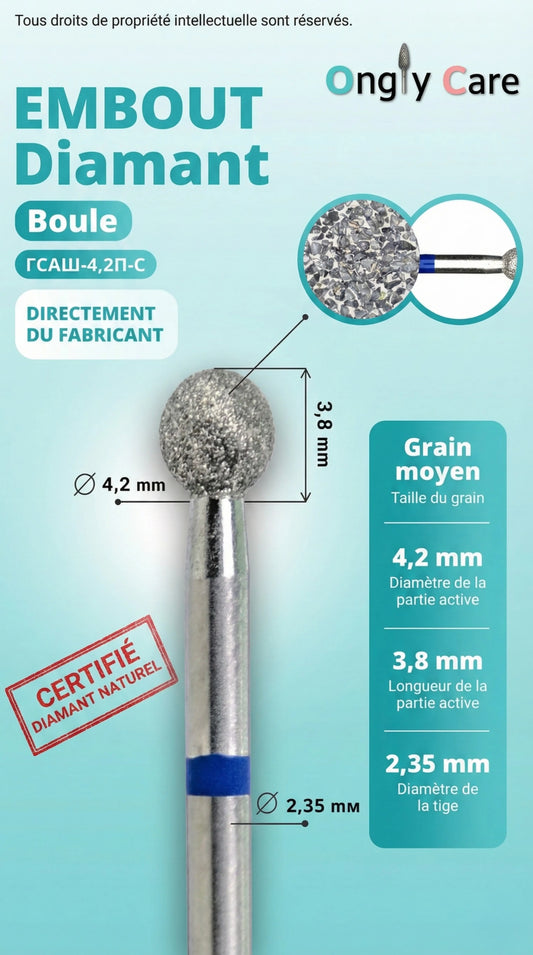
A diamond ball suits localised work around the cuticle with controlled technique and suitable grit.
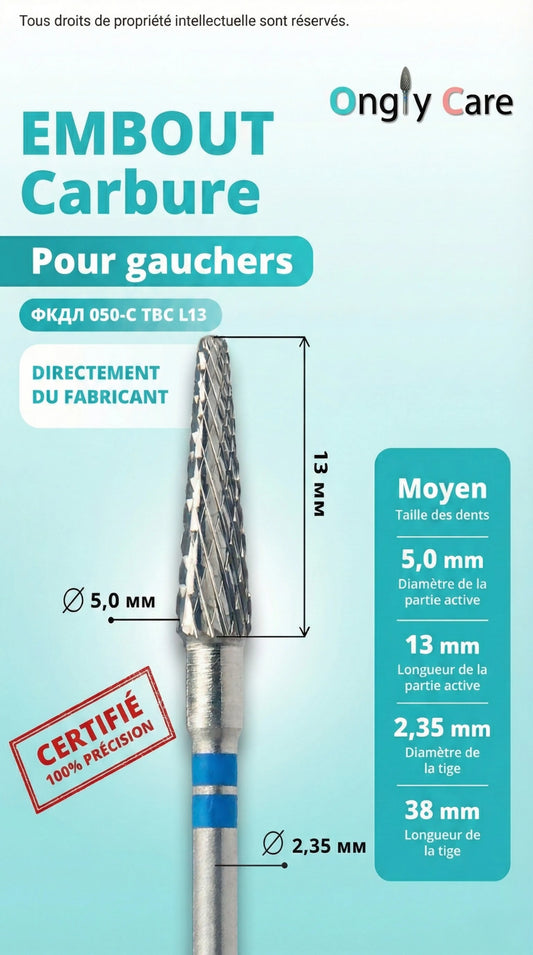
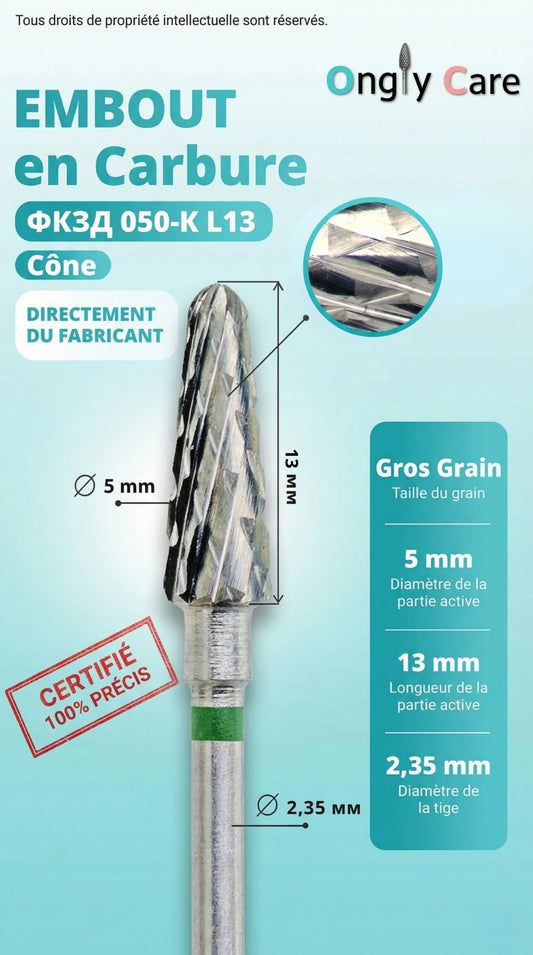
A carbide bit selected for the material and tooth size supports the removal of enhancements.
Compare shapes, grits and dimensions to assemble complementary bits for your practice.
Read the bands
On diamond bits, colour indicates abrasive grit; on carbide, it indicates tooth size. Multiple bands require a separate reading.
| Colour | Code | Typical grade |
|---|---|---|
| White | UM | Ultra fine (diamond) |
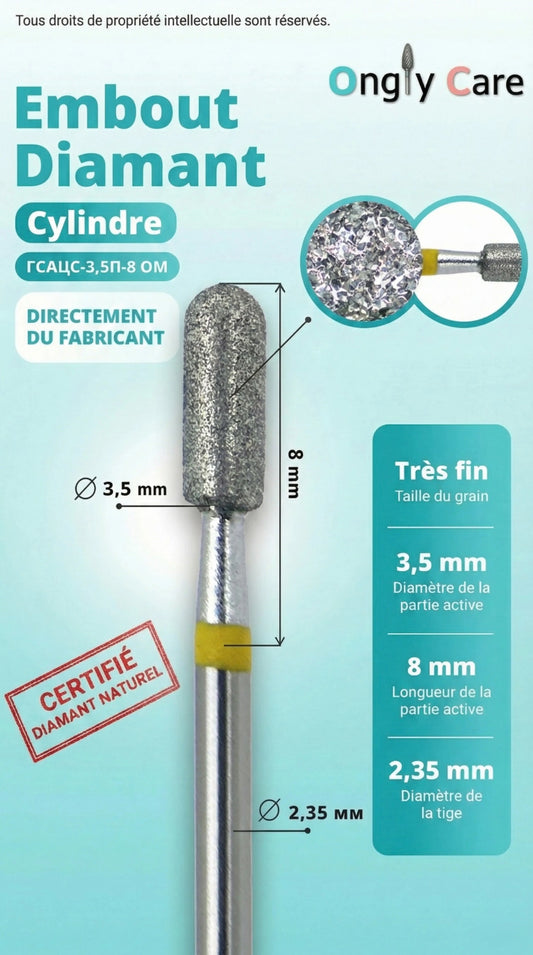
| Yellow | OM | Very fine |
| Red | M | Fine |
| Blue | C | Medium |
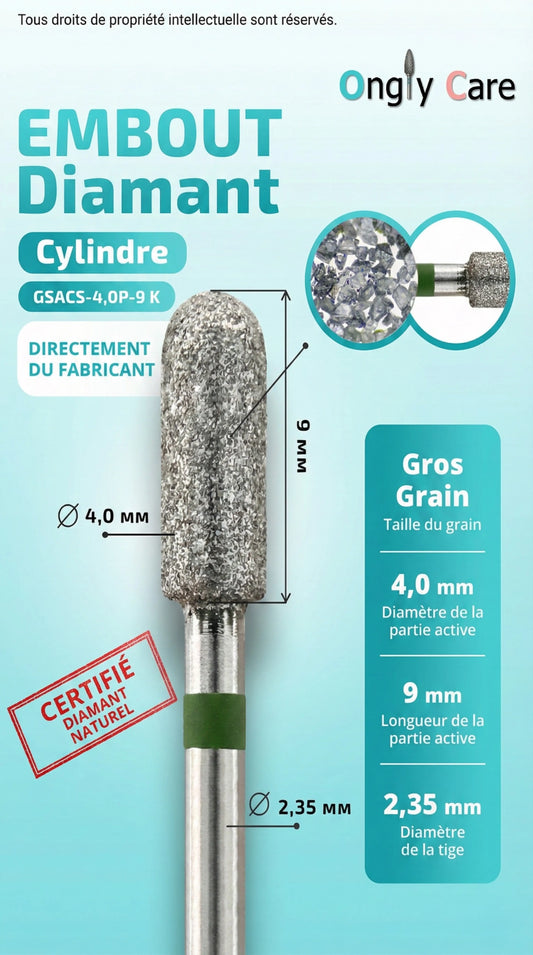
| Green | K | Coarse |
| Black | OK | Extra coarse |
White is a diamond reference. Available grades vary by model; always consult the bit’s product page.
Special markings
A combination of colours has a different meaning from a single band. Confirm the marking on the exact model.
These indicate an intermediate grit, such as yellow/red or red/blue.
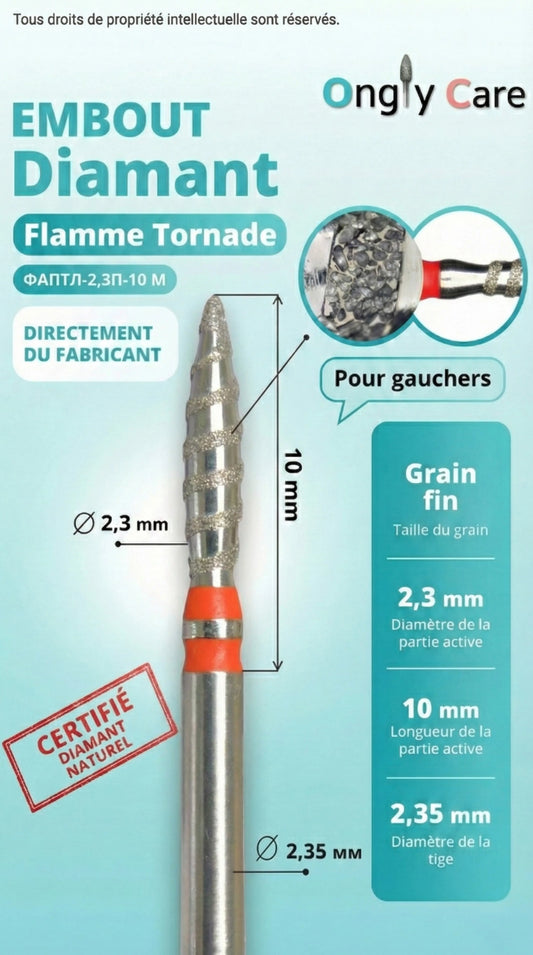
This marks KMIZ bits intended for left handed use. Check the rotation direction on the product page.
This indicates triple cut on relevant models. It does not by itself identify a left handed bit.
Choose a shape
Geometry determines the accessible area and technique. Diameter and length matter too.
For accessing sidewalls and nail folds, according to the selected size.
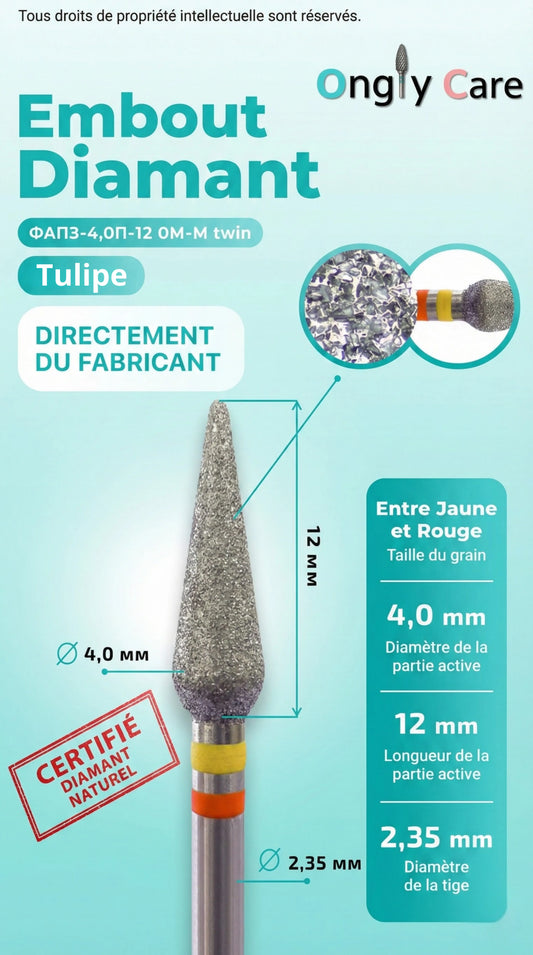
For localised contour work with an appropriate diameter.
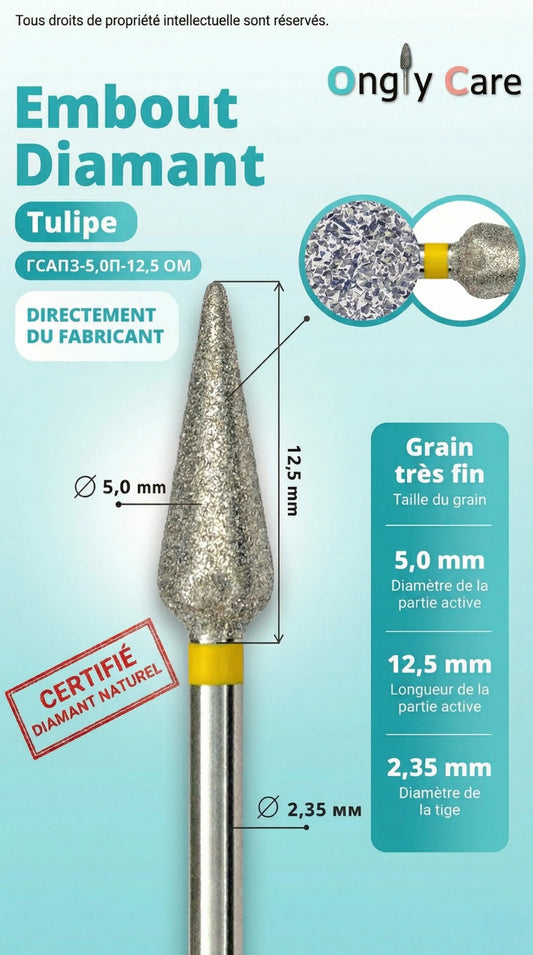
A flared profile chosen to suit the working area and technique.
For surfaces or enhancements, depending on the model’s material and teeth.
Use and care
Before use, inspect the bit, its fitting and shank compatibility with your handpiece. Match speed, pressure and rotation direction to the bit. Follow the manufacturer’s instructions for cleaning, disinfection and, where permitted, sterilisation.
Frequently asked questions
Diamond bits have an abrasive coating and are used, among other things, for preparation and contours. Tungsten carbide bits have cutting teeth and are commonly used for product removal. Select the model for the intended technique.
Diamond shapes such as the flame and ball are often chosen for nail folds and contours. Compare diameter and grit, and use an appropriate technique without excessive pressure.
Explore tungsten carbide models intended for enhancement material. Tooth size, shape and cut direction should suit the product and your technique.
Red generally denotes fine and blue medium. On diamond this describes abrasive grit; on carbide it describes tooth size. Check the individual model.
On a KMIZ diamond bit, two different colours indicate an intermediate grit, such as yellow/red or red/blue. Check the exact product description.
Two identical bands indicate KMIZ models intended for left handed use. Also check the name and rotation guidance before ordering.
Alongside another colour, purple can indicate triple cut on certain KMIZ carbide bits. It does not automatically mean left handed; check the product page.
Compatibility depends in part on the shank and handpiece. Check the model’s dimensions and your machine specifications before use.
Follow the bit manufacturer’s instructions and your professional protocol: remove debris, clean, disinfect and, if permitted for the model, sterilise appropriately. Inspect before reuse.
Dimensions appear on each model’s product page. Compare head diameter, head length and shank against your technique and handpiece.